Books and Monographs
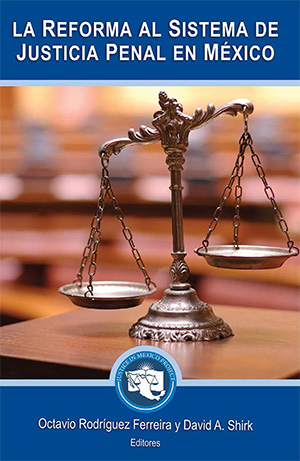
La reforma al sistema de justicia penal en México
2012
Edited by Octavio Rodriguez Ferreira and David A. Shirk
This monograph contributes to the study of recent changes to the justice system in Mexico through an analysis of relevant constitutional provisions in the reform process, the state implementation processes, and its evaluation. It also provides examples of specific processes in some states as well as analysis of specific figures included in the Mexican legal framework. The book-edited by the Justice in Mexico Project’s coordinator, Octavio Rodriguez, and principal investigator, David A. Shirk-was made possible by the United States Agency for International Development (USAID) who, through the Higher Education for Development (HED), generously funded the Legal Education Alliance between Mexicali Law School of the Autonomous University of Baja California (UABC), and the Justice in Mexico Project, the Faculty of Law, and the Trans-Border Institute, all at the University of San Diego (USD). The volume edited is the third and last of the series of monographs on security and rule of law by the Justice in Mexico Project.
___________________________
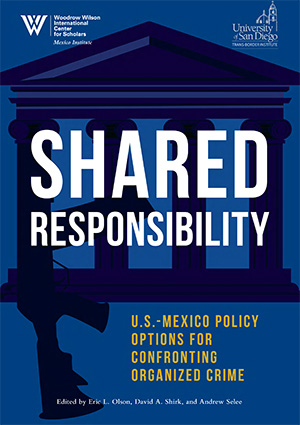
Shared Responsibility: U.S.-Mexico Policy Options for Confronting Organized Crime
October 2010
Edited by Eric L. Olson, David A. Shirk, and Andrew Selee

“Shared Responsibility: U.S.-Mexico Policy Options for Confronting Organized Crime” is a joint research project between the Woodrow Wilson Center’s Mexico Institute and the University of San Diego’s Trans-Border Institute. This publication examines specific challenges for security cooperation between the United States and Mexico including efforts to address the consumption of narcotics, money laundering, arms trafficking, intelligence sharing, policy strengthening, judicial reform, civil-military relations, and the protection of journalists. It concludes that binational efforts to stop organized crime and the exploding violence in Mexico have made positive advances but could fail to adequately address the challenge unless cooperation is significantly deepened and expanded.
___________________________
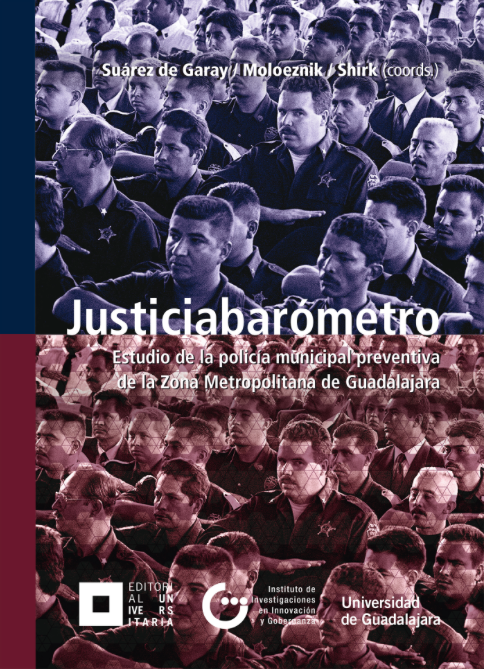
Justiciabarometro: Estudio de la policia municipal preventiva de la Zona Metropolitana de Guadalajara
November 2010
Edited by Maria Eugenia Suarez de Garay and David A. Shirk

“Justiciabarómetro: Estudio de la policia municipal preventive de la Zona Metropolitana de Guadalajara” is part of one of the most important debates of modern Mexico: how police should be reformed to better address the serious problems of public insecurity. The uniformed police is the protection the government provides to its citizens against conflicts, threats and dangers of everyday life. It is an essential link to the criminal justice system, and fundamental to democracy. The authors emphasize that in Mexico, the most urgent challenge is the need for a model in which citizens do not have the feeling that there can be abuses and restrictions and propose that the police should be reformed substantially until the public perception positive again. They raise a strategy to strengthen local police, because its members know their communities and are part of the social fabric.
___________________________
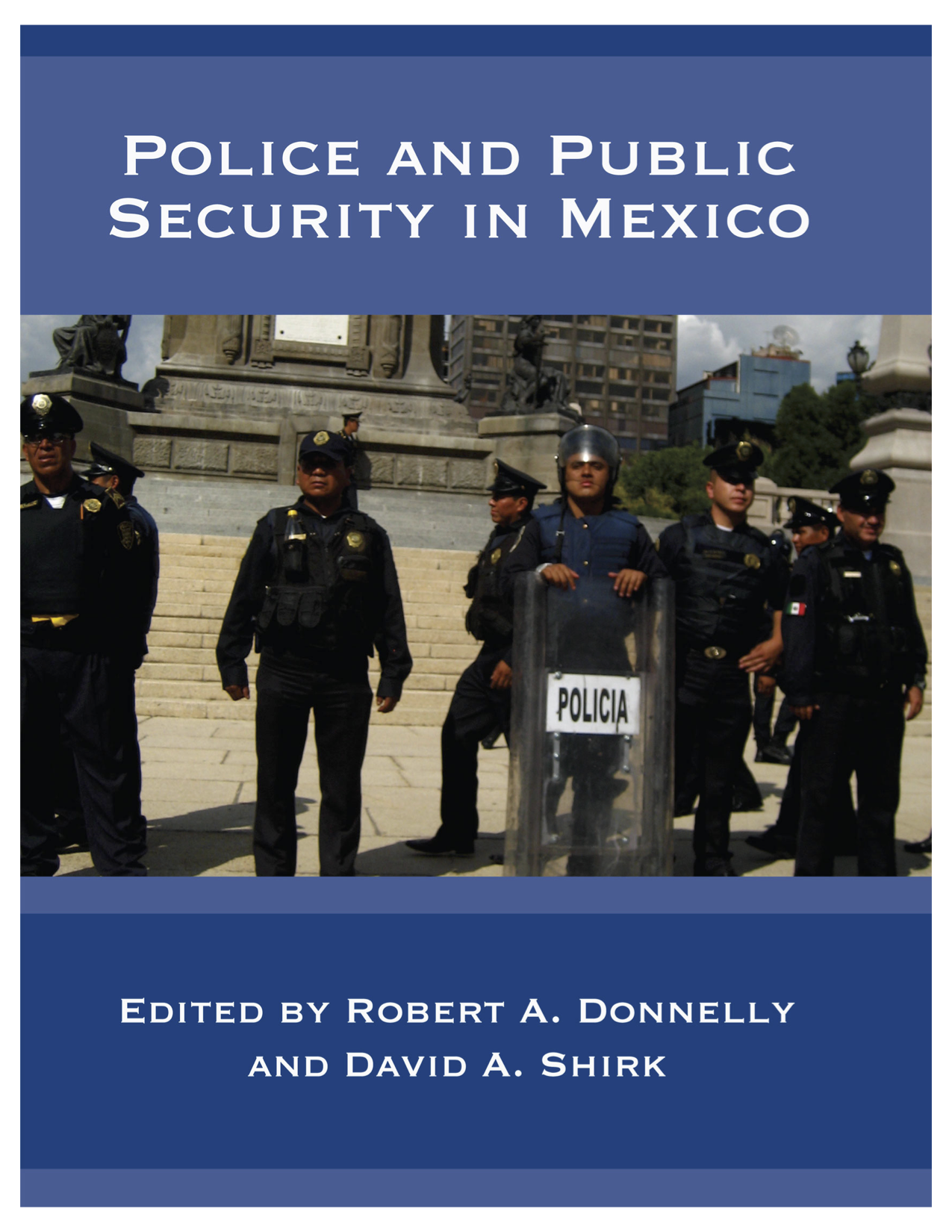
Police and Public Security in Mexico
December 2009
Edited by Robert A. Donnelly and David A. Shirk
In recent years, Mexico has faced a grave public security crisis. From 2006 to 2009, rampant cartel related violence has killed more than 13,000 people, including hundreds of police and military personnel. Given the inability of domestic law enforcement agencies to adequately address these challenges, Mexico has deployed tens of thousands of troops to restore order and combat violent organized crime groups. In addition, Mexican and U.S. officials initiated unprecedented measures to promote cross-border collaboration in law enforcement and security, including the multi-billion dollar Merida Initiative to share responsibilities in fighting the war on drugs. These developments raise a host of questions about the course of Mexican public security and the prospects for strengthening the rule of law. This monograph brings together the works of nine exceptional scholars who present timely analysis of these questions, provide a thorough assessment of Mexico’s principal domestic security challenges, and offer insights on how to tackle them. The volume edited by Donnelly and Shirk is the second of the series of monographs on security and rule of law by the Justice in Mexico Project.
___________________________
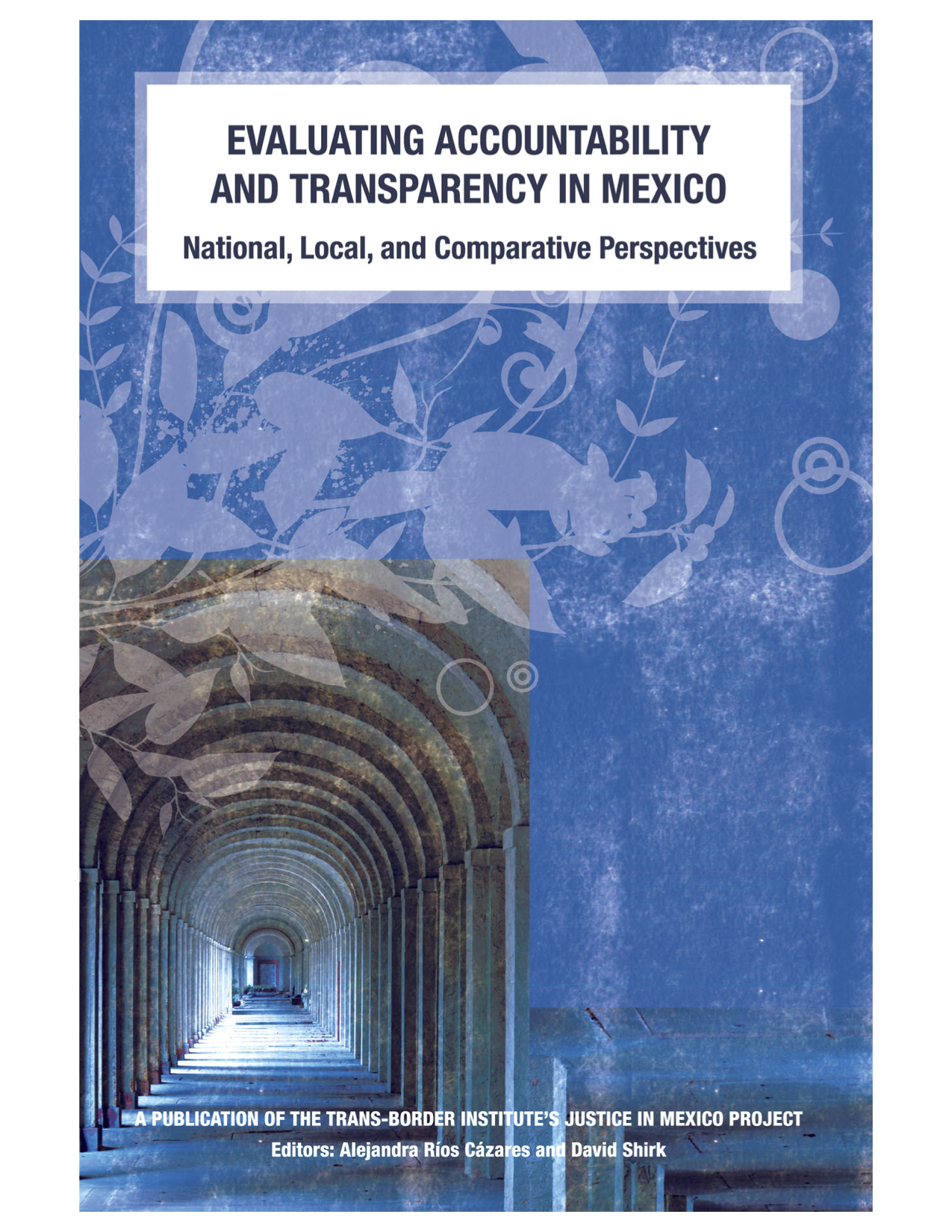
Evaluating Accountability and Transparency in Mexico. National, Local, and Comparative Perspectives
2007
Edited by Alejandra Rios Cazares and David A. Shirk
This monograph includes works covering a wide range of topics relating to Mexico’s justice system: effective enforcement of the law, government adherence to the law, and access to justice through law. Government accountability and transparency is the paramount theme in all these papers. The contributing authors have addressed justice-reform issues such as political corruption, criminal impunity, and inefficient enforcement of the law that routinely challenge Mexican citizens on a daily basis. They have also attempted to promote the aims of greater accountability and transparency in Mexico.
This monograph is the first of three to be published by the Trans-Border Institute (TBI) of the University of San Diego. In 2005, it became the coordination institution for a multiyear “Justice in Mexico” project that is focused on the administration of justice and the rule of law in Mexico. The project issued a call for papers to both American and Mexican scholars working on a range of topics related to justice-sector reform. The threefold rationale for the project is: (1) the need to decentralize analysis and reform efforts in Mexico; (2) the need for a greater emphasis on best practices; (3) and the need for U.S.-Mexican academic collaboration in the study of justice-sector challenges and reform. This publication of three monographs was made possible through the generous support of the William and Flora Hewlett Foundation.
___________________________
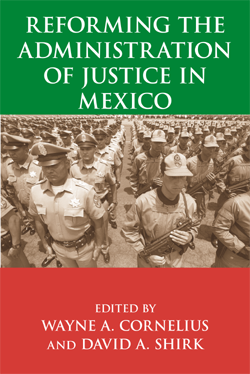
Reforming the Administration of Justice in Mexico
University of Notre Dame Press, 2007
Edited by: Dr. Wayne A. Cornelius, Distinguished Professor of Political Science, UCSD and Dr. David A. Shirk, Associate Professor of Political Science and Director of the Justice in Mexico Project, USD.
This important collection of essays on the Mexican criminal justice system features the works of several Justice in Mexico Project collaborators, including David A. Shirk, Alejandra Ríos Cázares, Guillermo Zepeda Lecuona, Sigrid Arzt and many others.
From the book’s backcover: “This landmark study examines the challenges Mexico faces in reforming the administration of its justice system. The contributors cover five key themes in Mexican justice reform: crime and criminology, policing and police reform, legal actors and judicial reform, civic mobilization and oversight in the justice system, and practical policy recommendations for future improvement of the justice system.”